By: Md. Abdullah-Al Muin
What is the Fibonacci Sequence?
The Fibonacci sequence is a series of numbers where each number is the sum of the two preceding ones, starting with 0 and 1. Mathematically, it can be expressed as:
F(n)=F(n−1)+F(n−2)
the initial conditions:
F(0)=0, F(1)=1
The sequence is as follows: 0, 1, 1, 2, 3, 5, 8, 13, 21, 34, 55, 89, 144, and so on. It is an example of a recursive sequence, where each term is generated by applying the same rule to the previous terms.

Fibonacci Sequence: Origin and History
The fibonacci sequence is named after the Italian mathematician, Leonardo of Pisa, or more famously known as Fibonacci. It dates back to the geographical area of today’s India, the Middle East, Greece, and mostly the Islamic world before Fibonacci contributed to its development.
Ancient Indian Mathematics
In the middle of the 3rd century BCE, an Indian mathematician Pingala worked out a method for the calculation of the combinations and thus the matter of prosody is based on the arrangements of combinations of long and short syllables in the verses of the poems. The other Indian scholar in the 12th century, by name Acharya Hemachandra, also expanded such sequence notions. He described the Fibonacci sequence in the context of combinatorial problems.
Greek and Islamic Contributions
Euclid explored mathematical concepts that would later be connected to the Fibonacci sequence. Euclid's study of ratios and proportions, especially the golden ratio, laid the groundwork for understanding the sequence's connection to aesthetics and natural patterns.
Al-Khwarizmi and Al-Kindi advanced the notion of algorithms and number theory– it was a mathematical culture that affected later European algebraists and numbers activators, with the inclusion of Al-Khwarizmi and the Islamic World’s Al-Fibonacci.
Examples of Fibonacci Sequence:
Basic Numerical Example
Sequence: 0, 1, 1, 2, 3, 5, 8, 13, 21, 34, 55, 89, 144, ...
- F (0) =0
- F(1)=1
- F(2)=1(0+1)
- F(3)=2(1+1)
- F(4)=3(1+2)
- F(5)=5(2+3)
F(6)=8(3+5)
In Nature:
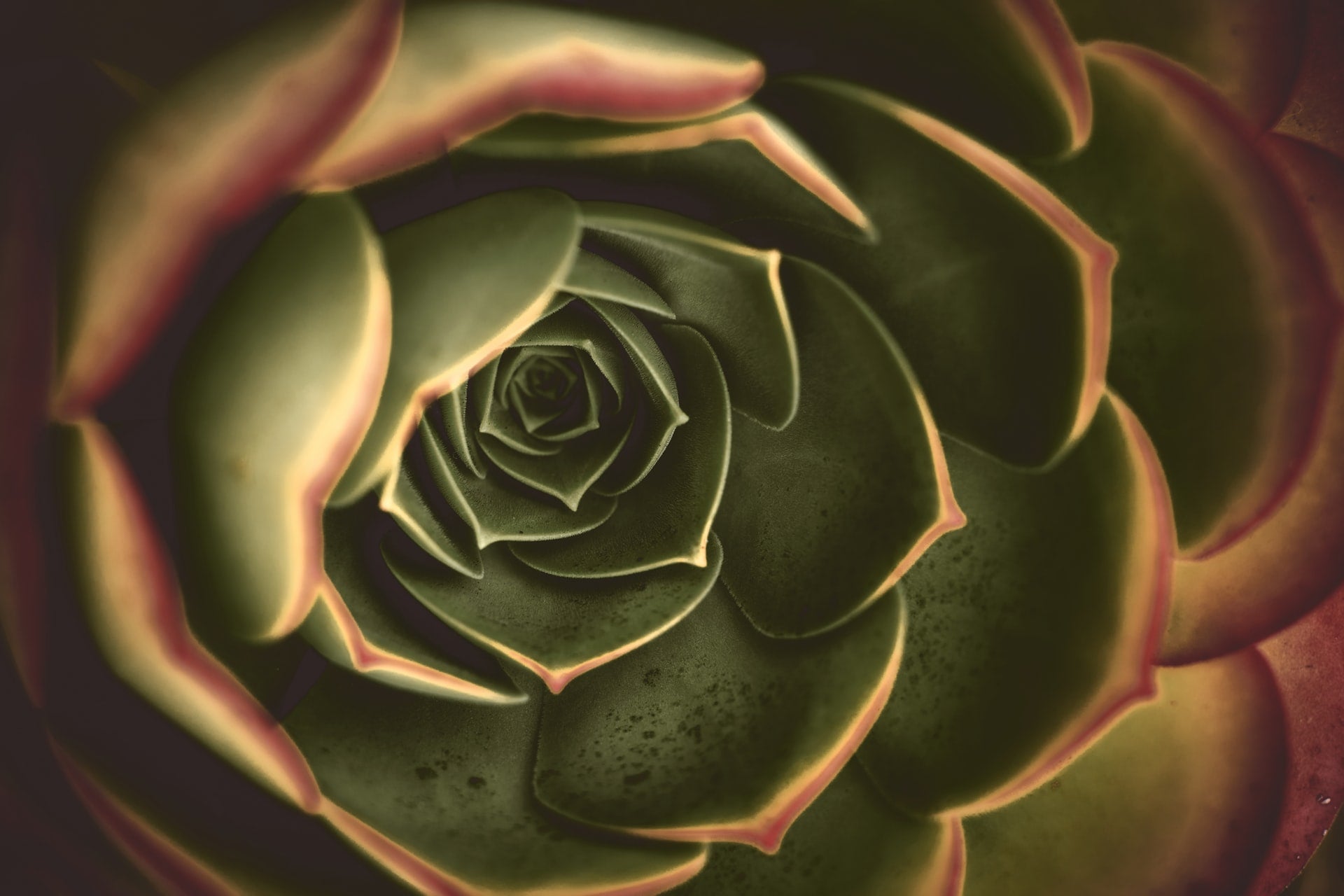
- Phyllotaxis: This phenomenon forms an angle that goes by the name of the first Fibonacci of one and the second Fibonacci of the other resulting in the optimized production of chlorophyll by the leaves.
- Flower Petals and Seed Heads: Some examples include lilies with three petals, buttercups with five petals, and daisies which can have petals in the numbers 34, 55, or 89.
- Animal Reproduction: According to the life cycle of beehives, the siring line of drones ( male bees) observes the Fibonacci sequence, where each generation possesses the number of for-fathers in accordance with the latter.
In Art and Architecture
- Ancient and Renaissance Art: The golden ratio has been applied in the design of ancient Greek temples, such as the Parthenon, as well as in the works of Renaissance artists like Leonardo da Vinci and Michelangelo.
- Modern Art: The Fibonacci sequence has also influenced modern artists, including Salvador Dalí, who used the golden ratio in his painting "The Sacrament of the Last Supper.”
- Architecture: The golden ratio and the Fibonacci sequence have been used in the design of buildings and monuments from the pyramids of Egypt to modern skyscrapers. The use of these mathematical principles in architecture is thought to create structures that are both functional and aesthetically pleasing.
In Computer Science
- Algorithm Design: The Fibonacci sequence is often used in algorithm design, particularly in dynamic programming and recursive algorithms.
- Data Structures: Fibonacci heaps are used in some graph algorithms such as Dijkstra’s shortest path algorithm. They are built based on the Fibonacci sequence.
- Cryptography and Number Theory: The Fibonacci and Golden sequences are used in Cryptography along with number theory in encryption and decryption techniques and in deriving distribution of primes.
In Financial Markets
- Fibonacci Retracement: Traders use Fibonacci retracement levels to identify potential support and resistance levels in financial markets.
- Algorithmic Trading: In using algorithmic trading, one can design the trading system and use Fibonacci analysis in the creation of the algo-trading system to exploit the recursion and patterns that are present in the market data.
Related books:
Knuth, D. E. (1997). "The Art of Computer Programming, Volume 1: Fundamental Algorithms."
Grünbaum, B., & Shephard, G. C. (1987). "Tilings and Patterns." W. H. Freeman and Company.
Livio, M. (2002). "The Golden Ratio: The Story of Phi, the World's Most Astonishing Number."
Hoggatt, V. E., & Bicknell, M. (1974). "Fibonacci and Lucas Numbers, and the Golden Ratio in Nature and the Arts." The Fibonacci Quarterly, 12(5), 482-485.
Add comment
Comments